
The brief that arrives every season
It usually comes in a single line from an advisor in New York or London. A couple in their early sixties, fit, widely travelled, bored of resorts. They want something with an edge. They also want a proper bed, a good bottle of wine, and a shower that works at the end of it.
That brief is harder to deliver in Asia than it sounds. The places with the most interesting edges — the karst passes of Vietnam’s far north, the unlogged lowland forest of Sabah, the current-swept straits of the Komodo archipelago — sit a long way from the nearest hospital, and in some cases from the nearest five-star room. The luxury has to be carried in, or placed at exactly the right distance.
We have been designing these trips across 10 countries for long enough to hold a clear view. Adventure at this level is a sequencing problem before it is a safety problem. Get the order, the season, and the people right, and most of the risk is designed out before anyone packs a bag.
Two kinds of risk
Every adventure we design separates two things that clients, and many operators, tend to blur together.
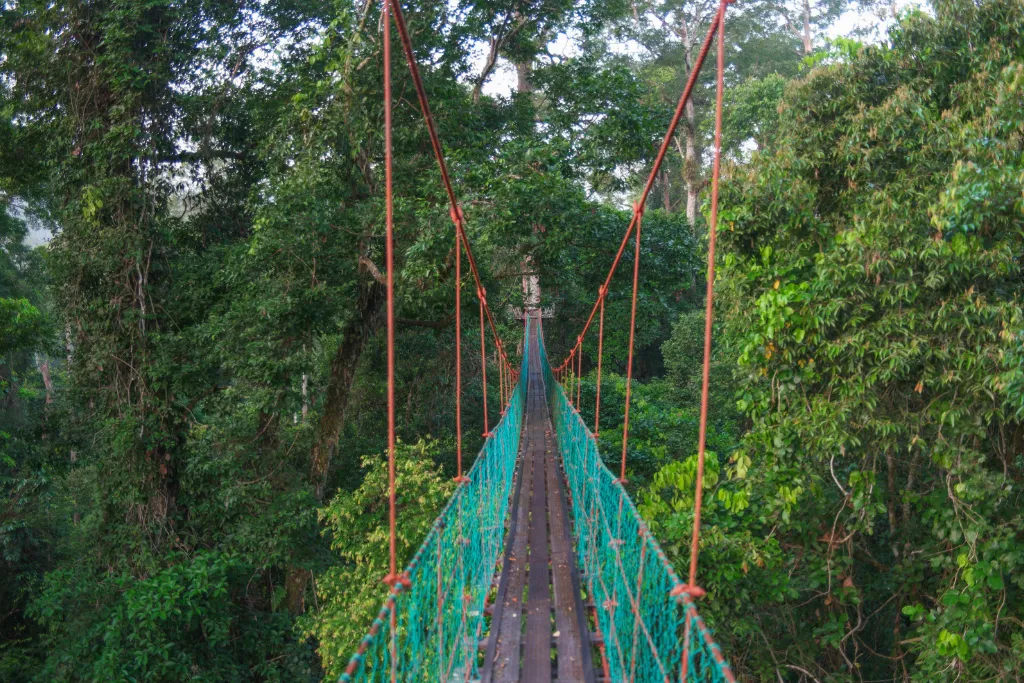
The first is felt risk. The drop beside the road on the Mã Pí Lèng Pass. The moment a Komodo dragon turns its head towards the path. The first rope-bridge step on a canopy walkway 27 metres above the forest floor. This is what the client is paying for. It raises the pulse, sharpens the memory, and becomes the story told at dinner in Connecticut three months later. We protect it. A guide who narrates every hazard or a walkway fenced like a hospital corridor takes away the thing the trip exists to deliver.
The second is real risk — the combination of likelihood and consequence that would turn a story into an incident. A motorbike on a wet hairpin ridden by someone on an international licence. A drift dive in a tidal current beyond the diver’s certification. A fall on a jungle trail three hours from a road, with no satellite phone in the guide’s pack. This is what we remove, reduce, or refuse.
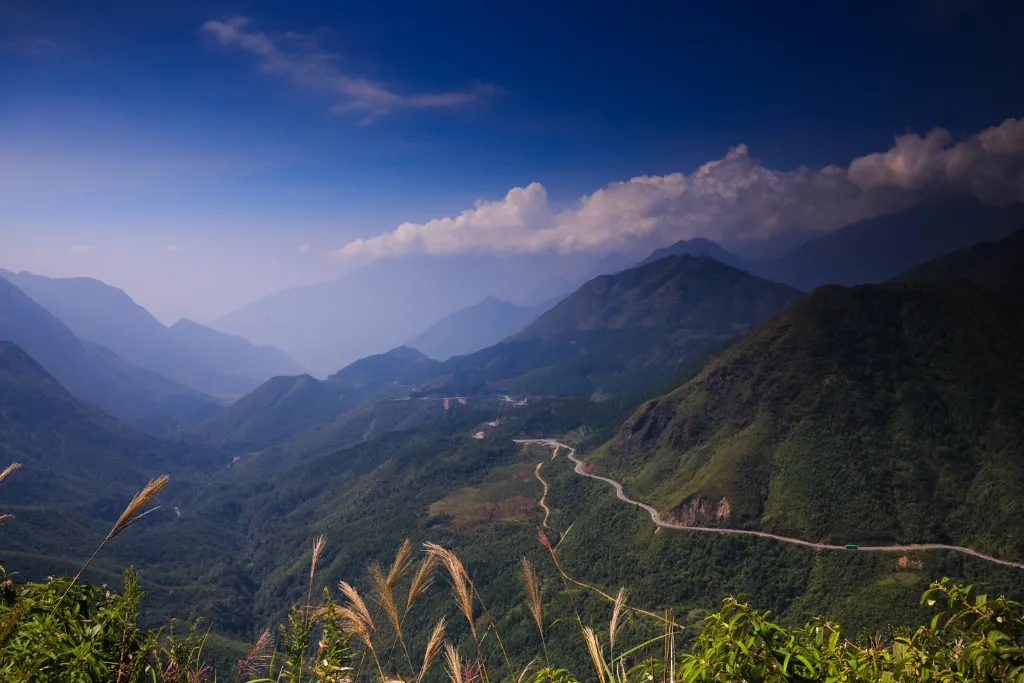
The craft lies in the fact that the two are often located in the same place. The Mã Pí Lèng Pass is both the most photographed view in northern Vietnam and a road that requires skill to drive. The design decision is who sits behind the wheel, in which month, and at what hour — so the client keeps the view and the vertigo, and hands the steering to someone who has driven that road several hundred times.
A useful test we apply to every element: if this went wrong, how long until the client is in competent medical hands, and who would make the first call? If the answer is vague, the element is not ready to sell.
Four places where the balance is struck
Vietnam — the far north of Ha Giang
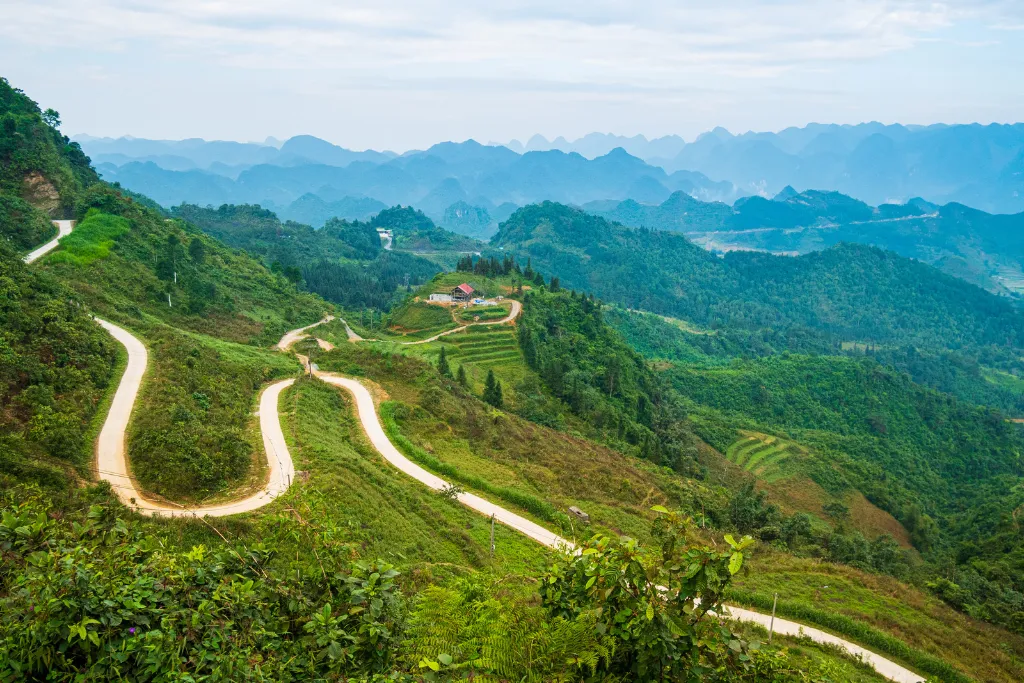
Ha Giang is Vietnam’s northernmost province, a limestone plateau pressed against the Chinese border and settled largely by Hmong, Dao, and Lô Lô communities. The road from Đồng Văn to Mèo Vạc crosses the Mã Pí Lèng Pass and drops 900 metres in 20 kilometres, with the jade-green Nho Quế river running through the gorge below. Dramatic is probably the right word.
The Ha Giang Loop has become one of the most searched adventure routes in Asia, and most of that traffic arrives on rented motorbikes. We do not put clients on a self-ridden bike. Vietnamese law requires a licence many visitors do not hold, and most travel insurance policies will not pay out on an unlicensed ride. Instead, clients travel either in a private 4×4 or riding pillion behind a local rider [name of lead rider — to confirm] who has run the loop for more than a decade. The client who wants the wind on their face gets it. The client who wants to watch the terraces go by with a coffee in hand gets that.
Comfort in the far north is simple — mountain lodges with good linen and hot water — so we keep it to three nights and plan the season carefully. Late September through November is dry and clear; October and early November bring the pink buckwheat flowers to the valleys around Sủng Là. We then bring clients back to Hanoi and to Capella Hanoi, a few streets from the Opera House, for two nights of the opposite.
Malaysian Borneo — Danum Valley
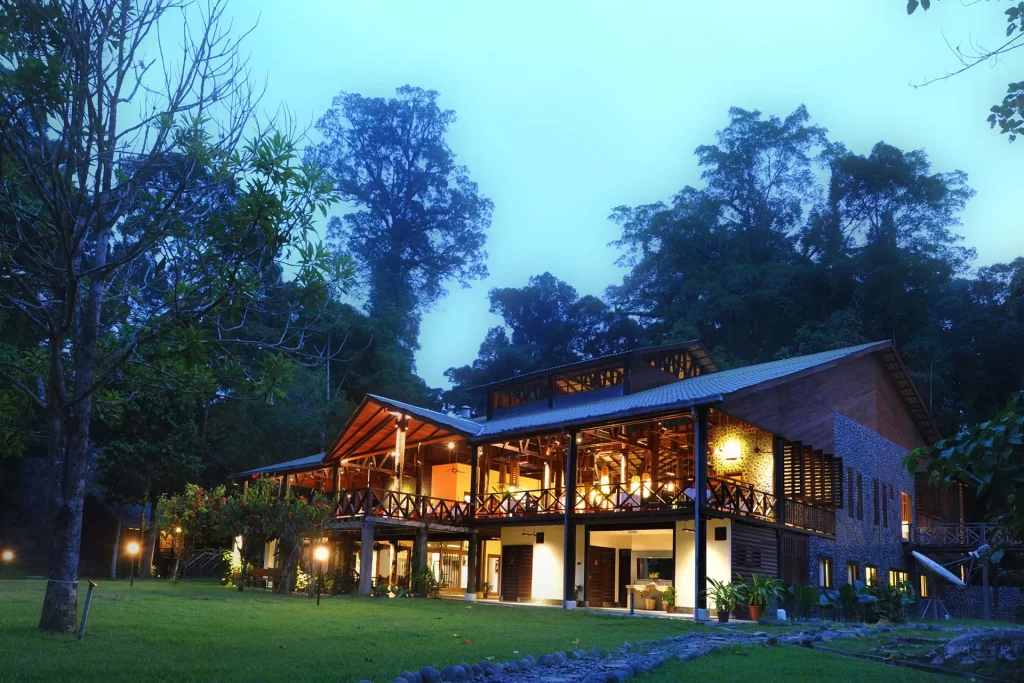
Danum Valley is 438 square kilometres of lowland dipterocarp rainforest in eastern Sabah that has never been logged, cleared, or farmed. It is estimated to be 130 million years old. Access is by a private track from Lahad Datu controlled by Yayasan Sabah, the state forestry foundation, and the only place to stay inside is Borneo Rainforest Lodge, with its chalets on the Danum river and a canopy walkway strung between the dipterocarps.
The felt risk here is intimate: leeches after rain, the sound of something large moving in the dark on a night drive, the walkway swaying underfoot as a pair of rhinoceros hornbills cross the canopy. We leave all of that in place. The real risk is distance. Lahad Datu, the nearest town, is around two and a half hours by road, and serious medical care is in Kota Kinabalu, a flight further on. So our guides carry satellite communication, clients are briefed on the trail grades before they choose them, and every client’s insurance is checked for helicopter evacuation cover before we confirm the booking.
Afterwards, we fly clients to Kota Kinabalu and take the 15-minute boat across to Gaya Island Resort, inside Tunku Abdul Rahman Marine Park, where the most strenuous decision is whether to snorkel before or after lunch.
Indonesia — Komodo by phinisi
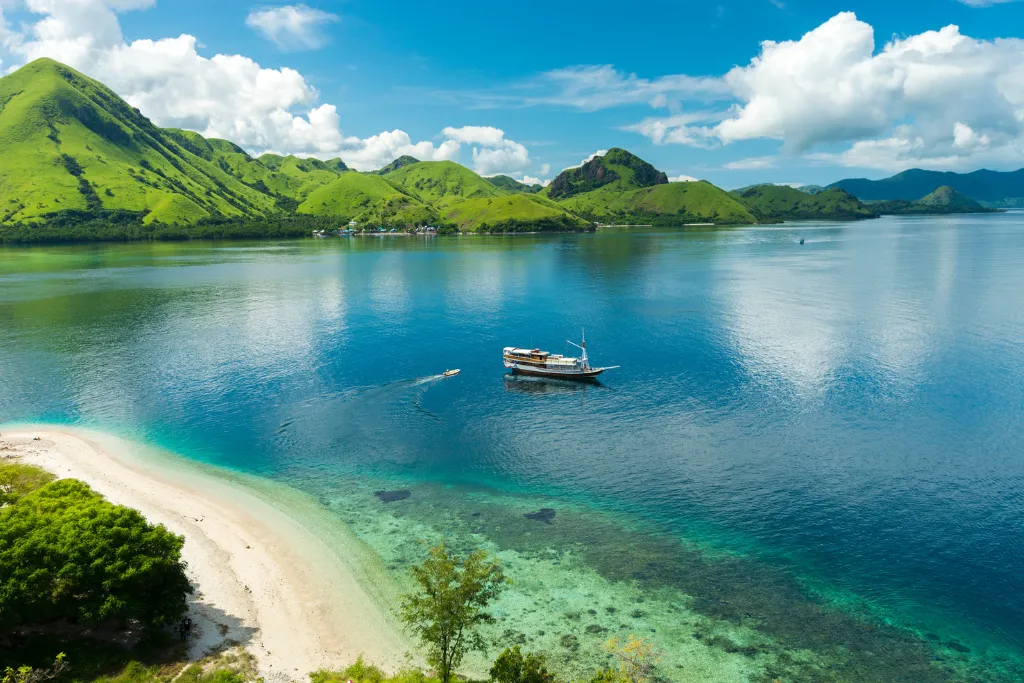
Komodo National Park covers the islands of Komodo, Rinca, and Padar and the waters between them, and has been a UNESCO World Heritage Site since 1991. It holds the world’s only wild population of Komodo dragons and some of the most intact reef in the Indo-Pacific, fed by strong currents that funnel between the Flores and Sumba seas.
Those currents are the adventure and the risk in one. Sites such as Batu Bolong reward experienced divers with dense reef life and punish anyone who misjudges the tide. We match every diver to sites by certification and logged dives, and we work only with liveaboards whose dive guides have years of local tide knowledge. On land, the dragons are walked with park rangers carrying the traditional forked staff, on trails the rangers choose that morning.
The vessel carries the luxury. A traditional Indonesian phinisi — the wooden Bugis schooner, rebuilt with en-suite cabins and a chef — turns a week of hard diving into something close to a private yacht charter. We confirm the location of the nearest working recompression facility before each departure, and we end the trip in Bali, usually in the quiet east at Amankila, before the long flight home.
Japan — the Niseko backcountry
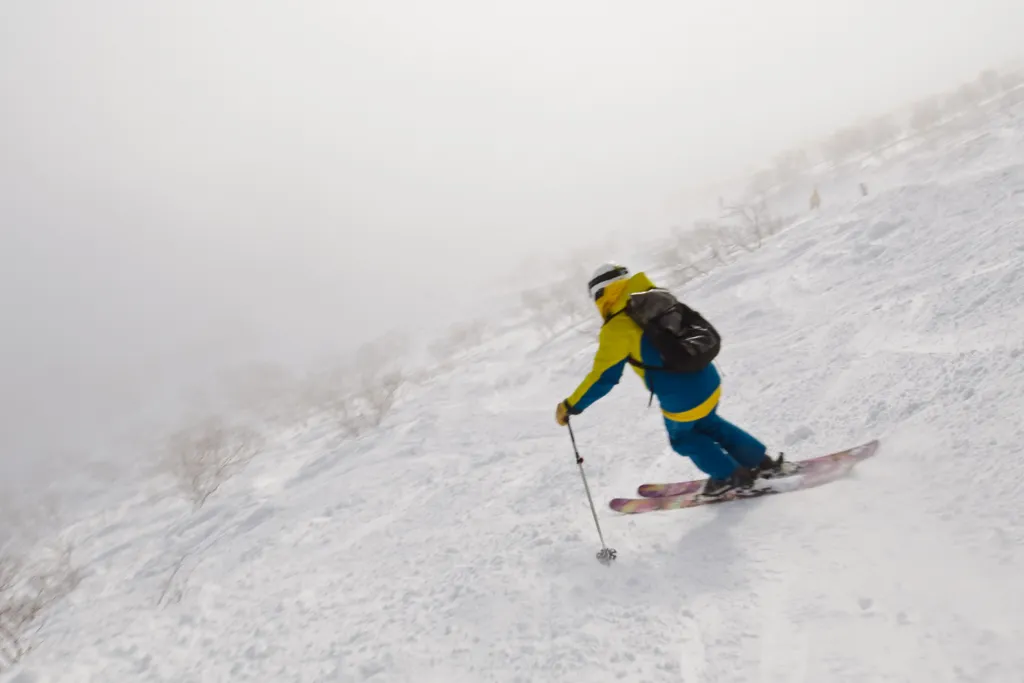
Niseko sits on the flank of Mount Annupuri in western Hokkaido and receives, on average, well over 10 metres of snowfall a season, most of it light and dry from the Siberian air that crosses the Sea of Japan. January and February are the heart of it.
The backcountry beyond the resort boundaries is the draw, and avalanche terrain is the real risk. Niseko manages this through the Niseko Rules: backcountry access only through designated gates, which close when conditions demand, with a daily avalanche bulletin. We add a certified mountain guide [name — to confirm], full avalanche kit for every client, and a rule that the guide’s decision on the day is final. Most of our clients have skied the Alps and the Rockies. The ones who have skied here tend to come back.
At night, the answer is Zaborin, a ryokan of 15 villas in the forest outside Kutchan, each with its own indoor and outdoor onsen. Cold legs and a hot spring, with snow falling on the water, is the entire case for the destination in one image.
How we design it
The four trips above look different on the map. Underneath, they are built on the same six decisions, and these are what we talk through with an advisor before a proposal is written.
- Season comes before site. The same route can be a clear-sky ride or a landslide risk depending on the month. Ha Giang in July is wet and the roads slip; in October it is at its best. Komodo’s dive conditions shift with the monsoon. We choose the window first and fit the destination to it, and when a client’s dates are fixed, we change the destination rather than force the season.
- The hardest day comes early. Fitness and attention are highest in the first third of a trip, before jet lag has been paid off with late dinners. We place the most demanding days there and keep the last third for recovery, so nobody attempts the steepest trail of the trip on a tired final morning.
- Recovery sits next to the effort. A spa week at the end does little for someone who has done four hard days in a row. We place a night of real comfort directly after the most demanding stretch — Capella Hanoi after Ha Giang, Gaya Island after Danum — so the contrast lands while the effort is still fresh in the legs.
- The guide has the final word. Every adventure element is led by a named guide whose record we know, and that guide holds the authority to change or cancel an activity on the day. The advisor and the client know this in advance. It is the single most effective safety decision we make, and it only works if we back the guide every time.
- We know the line to care. For every remote element, we write down three things before we sell it: the distance to competent medical care, how the guide communicates from the site, and whether the client’s insurance covers evacuation from it. Where the line is long, we shorten it — satellite communicators, a vehicle on standby, a charter option identified in advance — or we change the plan.
- Every hard day has an equal alternative. If the wind closes the Niseko gates or the current runs too strong at Batu Bolong, the day does not collapse into a hotel afternoon. There is a second plan of the same quality: a sheltered bay with the same reef life, a cat-skiing morning, a cooking day with a Hmong family in a village the road was going to pass anyway.
None of this is visible to the client on the day, and it should not be. The guest experiences a guide who seems to know exactly when to go and when to wait. The advisor, who has read the planning notes, knows why.
What we decline to sell
A DMC’s judgement shows as much in what it refuses as in what it offers. A short list of the adventure requests we turn down, and what we propose instead:
- Self-ridden motorbikes on mountain roads. The licence and insurance position alone rules it out in Vietnam and much of Southeast Asia. We offer an experienced rider or a private 4×4 on the same route.
- Elephant riding and captive-wildlife encounters. A standing rule across all 10 countries. Where a client wants time with elephants, we place them at a sanctuary that does not permit riding, with a keeper who explains the animals’ histories.
- Summit treks outside their season. The trail to the rim of Mount Rinjani on Lombok closes for the wet months each year for good reason. Clients who want a volcano in January get a different one, or a different month.
- Kawah Ijen without the right conditions. The walk into the East Java crater for the blue flames passes through sulphur gas. We run it only with proper respirators and a guide who reads the wind, and we steer clients with asthma or heart conditions to the rim at sunrise instead.
- Village visits the village did not agree to. Adventure itineraries have a habit of treating remote communities as scenery. Every homestay, meal, or walk through a village on our routes is arranged with the families involved and paid to them directly.
We would rather lose a booking over one of these than explain an incident to an advisor who trusted us with her best client. Most advisors, once they hear the reasoning, prefer the alternative.
The balance, in practice
The clients who get the most from these trips are rarely the most daring. They are the ones who trust the design enough to stop managing it — who ride pillion down the Mã Pí Lèng with their hands free for the camera, who hand the decision about the Niseko gate to the guide without argument, and who sleep well in a forest chalet because someone has already thought about the night.
That trust is built long before the trip, in the conversation between the advisor and us. It is where we set out the season, the guide, the line to care, and the alternative for every hard day, so the advisor can sell the adventure with confidence and the client can simply live it.
If you have a client whose last three trips were comfortable and who has started asking for something with an edge, write to sales@discoverydmc.com with a line about who they are and what they have already done. We will come back within four working hours with a first view on where in Asia that edge should be, and which month.
Travellers reading this: every Discovery journey is arranged through your travel advisor. Share this piece with them as a starting point.

Article by
Mika Itavaara
Mika is the founder of Discovery DMC, a destination management company crafting high-end, experiential trips across Asia. With over 25 years in the travel business — including years spent living and working in Myanmar — he’s based in Chiang Mai and writes here about the places, people, and ideas behind the trips Discovery designs.

Comments are closed.