PATTAYA
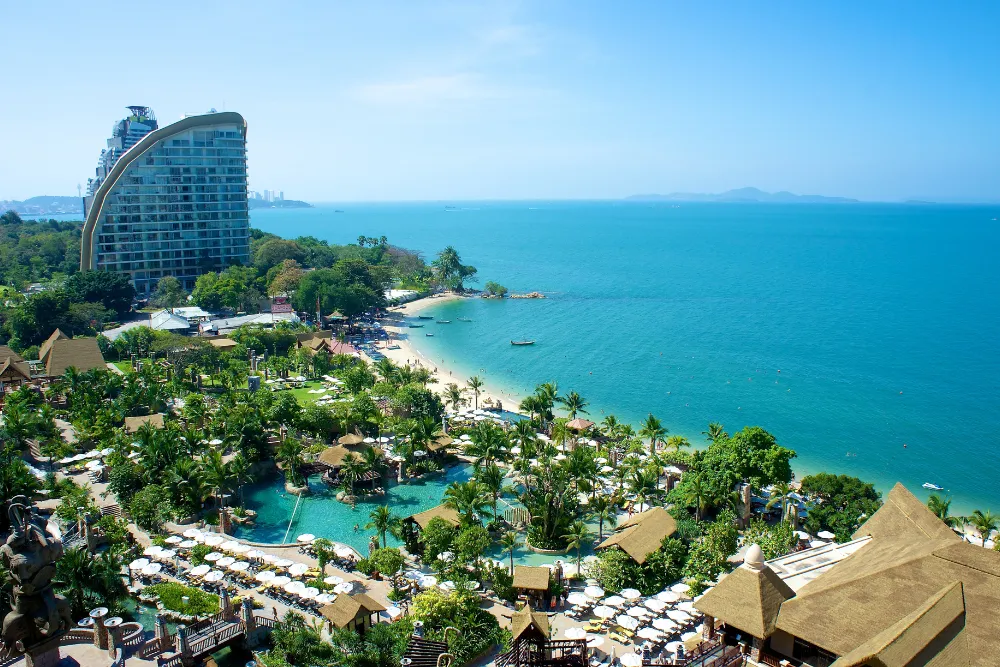
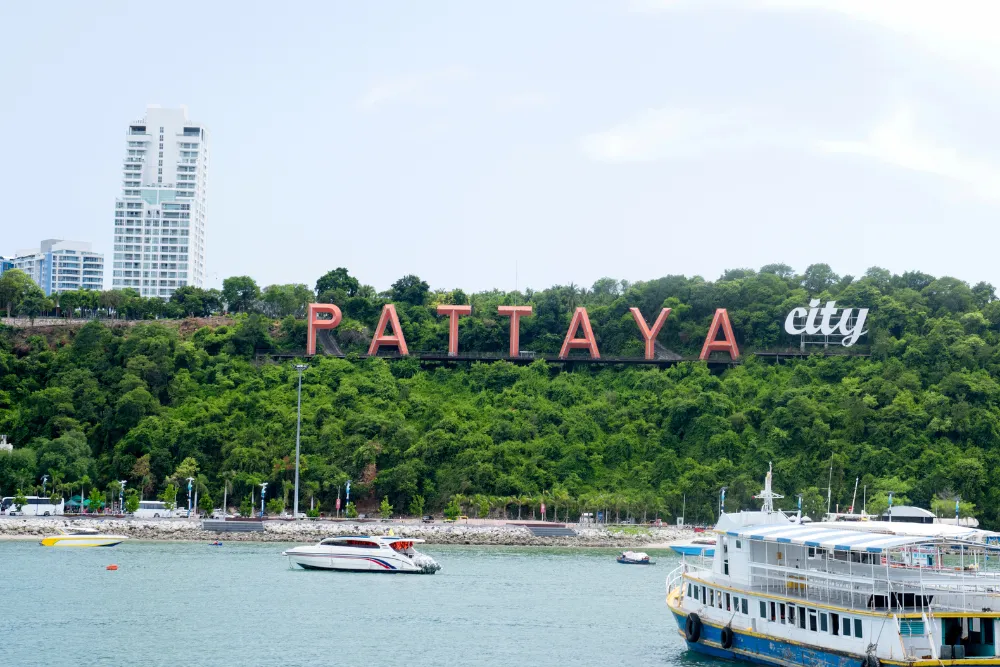
Just ninety minutes down the Gulf coast from Bangkok, in Chonburi province, Pattaya has spent six decades reinventing itself. What began as a quiet fishing village at Naklua, then a rest-and-recreation stop for American servicemen flying out of nearby U-Tapao during the Vietnam War, has grown into a long crescent of contrasts: the neon pulse of Pattaya Beach and Walking Street gives way, headland by headland, to the calmer sands of Jomtien and the fishing harbour at Bang Saray. Wooden spires rise above the sea at the Sanctuary of Truth, still carved by hand more than four decades after the first beam went up, while Nong Nooch’s tropical gardens and the coral-fringed beaches of Ko Larn sit within easy reach of the city centre. For travellers who want Thailand’s most energetic seaside city and a genuine family beach escape in the same afternoon’s drive of Bangkok, Pattaya remains the coast’s most versatile stop.
Pattaya trades a sleepy fishing cove for the liveliest stretch of Gulf coast within reach of Bangkok. Our travel designers curate everything from private beach clubs and family-friendly resorts to sunrise visits at the Sanctuary of Truth and speedboat days at Ko Larn — the full range of Thailand’s most versatile seaside city.
PATTAYA Highlights
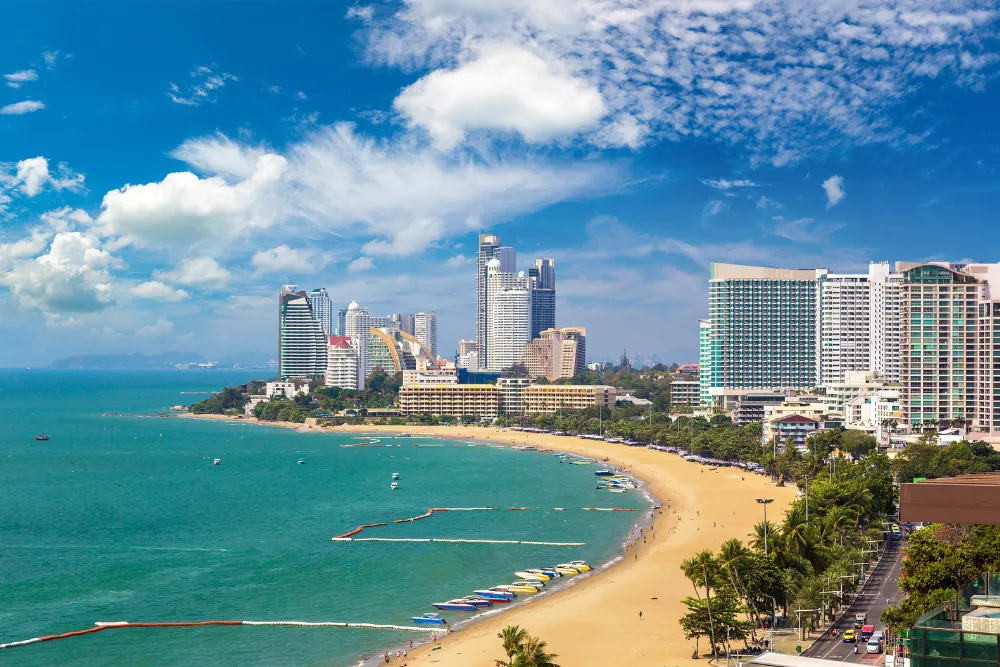
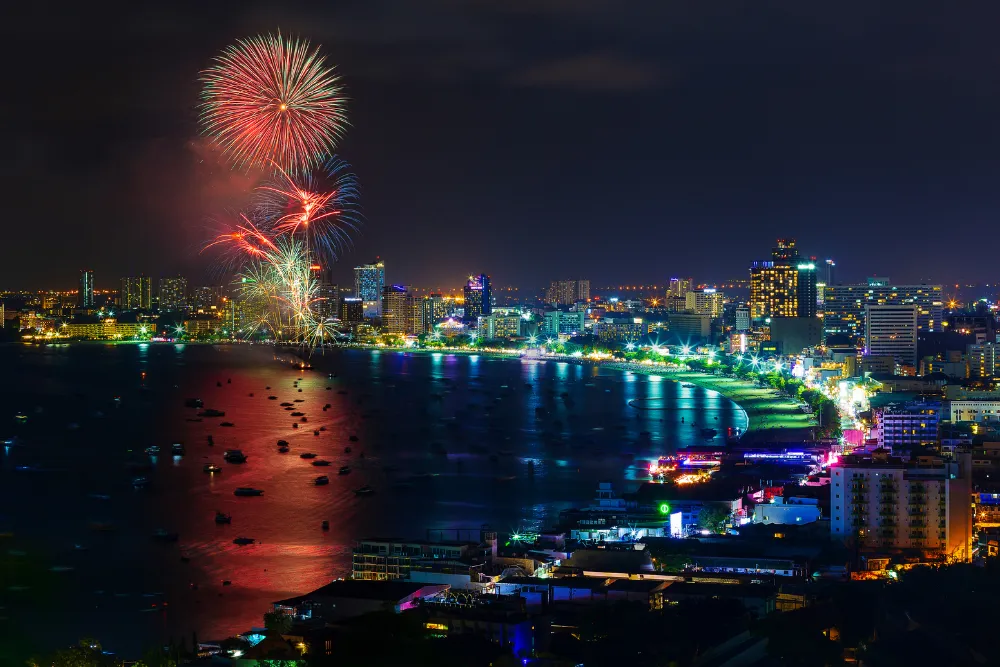
Pattaya BeachThe city’s main promenade, a three-kilometre curve of sand backed by hotels, beach clubs and restaurants, with Beach Road running its full length. Sun loungers and jet skis by day give way to open-air dining and live music as the evening comes in.
Walking StreetThe pedestrianised strip at the southern end of Pattaya Beach, closed to traffic after dark and lined with bars, clubs and street-side kitchens. Thailand’s most famous nightlife scene, best experienced with a guide who knows which doors are worth walking through.
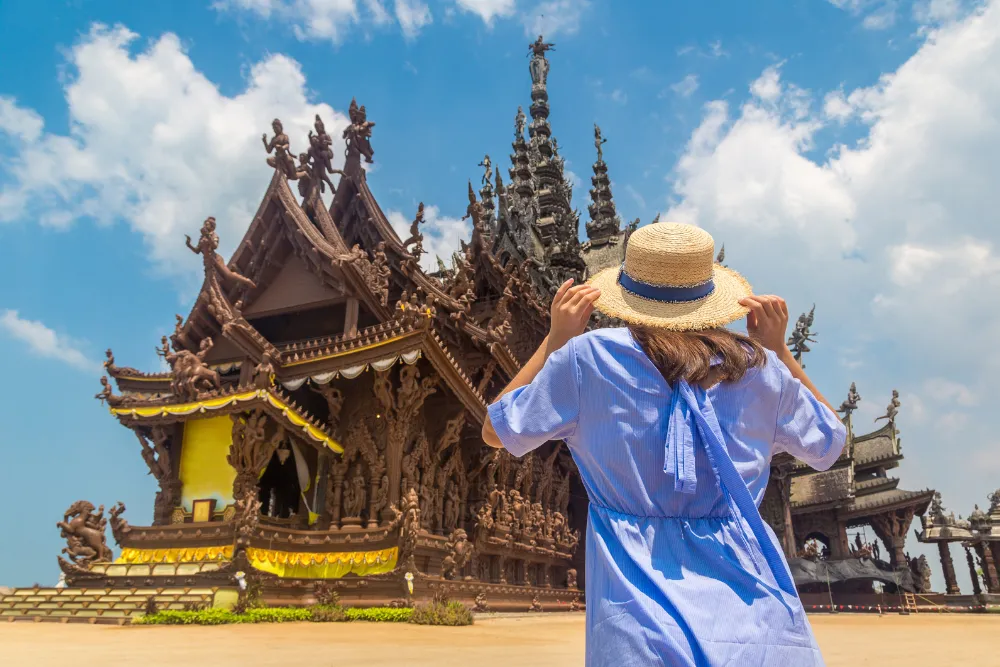
Sanctuary of Truth (Wang Boran)A monumental wooden temple rising 105 metres above the Gulf, under construction without a single metal nail since 1981 and still being carved today. Its towers blend Thai, Khmer and Hindu mythology into one of Southeast Asia’s most ambitious works of craftsmanship.
Nong Nooch Tropical GardenSix hundred acres of themed gardens south of the city, from a French-style parterre to an orchid house and a 3,000-seat amphitheatre for elephant and cultural performances. A half-day escape into landscaped jungle that rewards an early start.
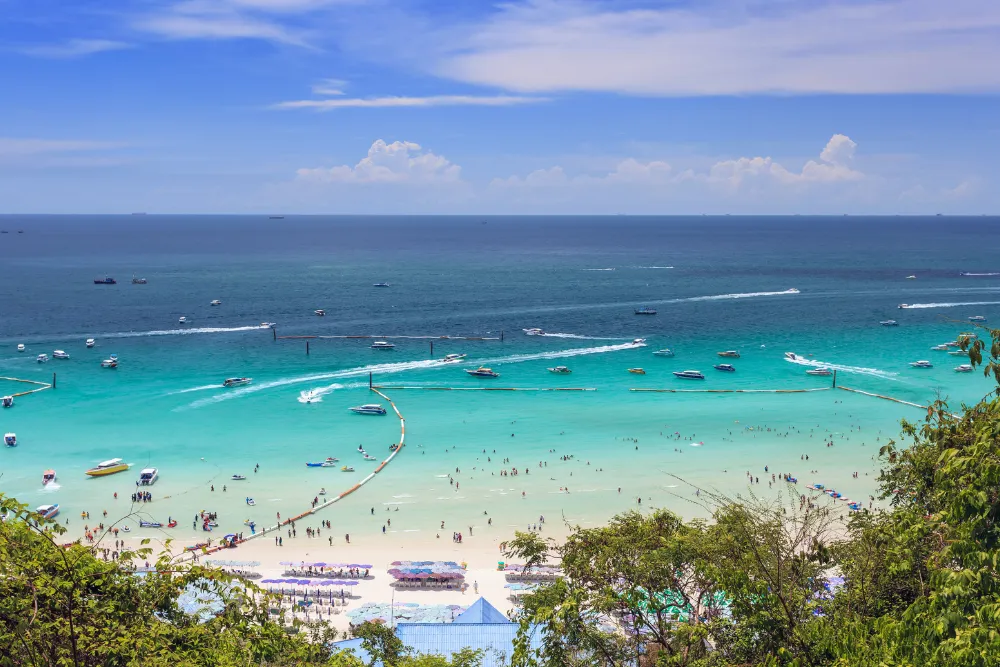
Ko Larn (Coral Island)A forty-five-minute ferry from Bali Hai Pier delivers six white-sand beaches and clear, calm water for snorkelling and swimming. A speedboat charter cuts the crossing to a few minutes for travellers who prefer more beach time and less queue.
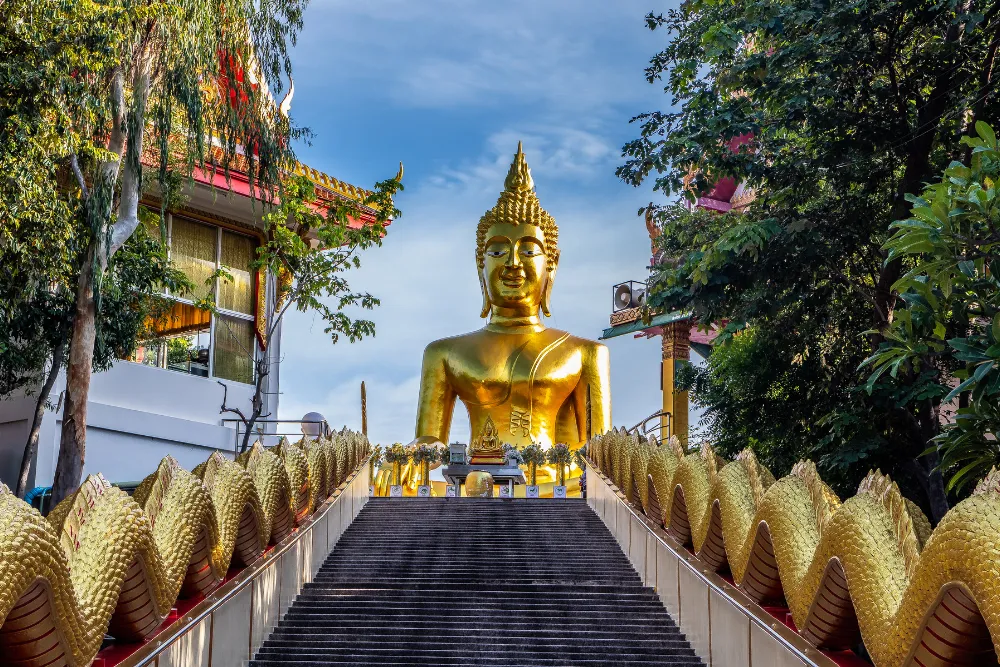
Big Buddha Hill (Wat Phra Yai)An 18-metre golden Buddha, completed in 1977, crowns Pattaya’s highest natural point on the headland between Pattaya and Jomtien. The temple grounds and adjoining park give the city’s best panorama, coastline to coastline.
Jomtien BeachA quieter six-kilometre stretch just south of central Pattaya, favoured by families and watersports enthusiasts for its calmer water and wide beachfront promenade. Windsurfing, kitesurfing and parasailing operators line the sand by day.
Pattaya Floating MarketFour zones built around Thailand’s regional cultures, linked by wooden walkways over the water in South Pattaya. Boat rides and regional street food make for an easy, photogenic introduction to Thai culture between beach days.
Fresh Seafood & Beachfront DiningFrom Naklua’s seafood stalls to the beach clubs of Pattaya and Jomtien, the day’s catch — prawns, squid, sea bass — arrives grilled or stir-fried to order. Best enjoyed barefoot at a beachfront table as the sun goes down.
For centuries, Pattaya was little more than a fishing village on the Gulf coast of Chonburi province. Its transformation began in 1959, when American servicemen posted to the nearby U-Tapao airbase — built for B-52 missions during the Vietnam War — first discovered its beaches; the Nipa Lodge, the area’s first international hotel, opened in 1964. Within a decade Pattaya had become the region’s best-known rest-and-recreation stop, hosting tens of thousands of visiting troops a year until American forces withdrew in 1976.
European package tourism filled the gap through the 1980s, and Pattaya’s first high-rise hotels appeared soon after; the city gained special municipal status in 1978. In the decades since, development has spread south toward Jomtien’s calmer beaches and golf courses, and the city has worked to reposition itself as a family and lifestyle destination alongside its nightlife. Today Pattaya sits within Thailand’s Eastern Economic Corridor, with the expansion of U-Tapao airport and a planned high-speed rail link to Bangkok signalling the next stage of that shift.
Pattaya is easily accessible from Bangkok, located around 1.5–2 hours by road. International travellers can arrive via Suvarnabhumi or Don Mueang International Airport, with private transfers available for a comfortable and seamless journey. Pattaya’s own U-Tapao International Airport, just 30 minutes south of the city, also serves a growing number of regional and domestic flights and is the fastest option for travellers connecting from Koh Samui or within Thailand.
Interested in festivals? read more about festivals in Thailand.
Journey Examples
Thailand / Essential Information
- Visas and border crossings
- Country facts and figures
- Language and culture
- Security
- Money
- Mobiles and the Internet
- Travel to and around Thailand
- And more
THAILAND JOURNALS
Insights and inspiration for travel designers and discerning travellers planning a journey through the Thailand.
- Discover Thailand’s Historic Waterways: Luxurious Private Charter from Bangkok to Ayutthaya
- The November Question: Where in Thailand to Send Clients for the High Season
- Best Time to Visit Thailand: A Guide to Weather, Events, and Experiences
- The Mandarin Effect: Bangkok After the Bamboo Bar
- Rejuvenate in Paradise: Thailand’s Most Exclusive Wellness Escapes
- Mike White’s Thailand: The Trip the Show Should Have Taken